
AI Hands-on Barcamp Düsseldorf: Between Magic, Mechanics and SMEs
- Rebecca Mischke
- Feb 2
- 4 min read
Event Recap | 01/28/2026 | Ruby Carl Workspace, Düsseldorf

18 people. One room. Many use cases. On January 28th in Düsseldorf, we didn't just explain AI – we did it.
No lectures, no "prompt theory," no passive observation. Instead: small groups, real challenges from work and everyday life, 60 minutes of hands-on practice, followed by a joint debriefing: What was surprising? What worked? What are our key takeaways?
"Do, try, compare, discard, improve, learn – together."
On January 28, 2026, we met with around 18 participants at the Ruby Carl Workspace in Düsseldorf for the AI Hands-on Barcamp. Not for a lecture, not for a panel discussion, but for a format that deliberately felt open: a Barcamp/think tank focused on real use cases.
Because that was the announcement made at the beginning by our host Daniela Grego, and she set the tone:
“We will work together. I have no idea what will be created today – and neither do you.”
What was different about that evening
Instead of “Best Practices” from the stage, there were Best Questions at the table .
After a brief arrival and initial introductions, we went straight into practice:
small groups
Real questions from work & everyday life
Free table changes according to the two-foot principle
60 minutes hands-on
Then: hard cut & joint evaluation (“What are you packing in your suitcase?”)
The result: an evening full of pace, depth, and a surprising number of aha moments.
“Which AI do you use?” – an honest reality check
It became clear during the introductions: most people don't work with just one tool, but with a mix of tools .
Some people are at home on ChatGPT every day .
Others swear by Claude for writing (“it often feels clearer”).
In corporate environments, Copilot is often the pragmatic standard: integrated, accessible, and fast for planning and structuring.
And then names like Mistral come up , or the desire not to have to manage “ten tools in parallel”.
What stuck with me was not “which is the best?”, but rather: What task do you have – and which tool is really suitable for it?
Partner tool in practical testing: one workspace instead of tool-hopping
A bonus element of the evening was access to a test environment from our partner nuwacom : an interface that brings together various LLMs, chat functions and “agentic” workflows, with a focus on GDPR compliance , project structure and knowledge base logic.
Especially exciting for many:
Upload documents and make them usable as a knowledge base
Organize projects using folder/workspace logic
Store prompt libraries centrally instead of distributing notes everywhere.
Make content/chats searchable
and even: record meetings and process transcripts directly.
In short: less “tool-zapping”, more “work environment”.
The think tank topics: from GDPR to museums
The groups then continued in the same wild and practical fashion as the title had promised:
1) Efficiency vs. Quality: “Human in the loop” remains mandatory
Especially in areas concerning regulation, science, or sensitive industries (e.g., health communication), it has been stated very clearly: AI saves time – but it does not replace responsibility .
One approach that came up several times:
“Show me your approach before you reply.”
“Give me sources for every statement.”
“Don’t invent anything.”
and: plausibility check using common sense (because hallucinations don't politely announce that they are happening)
2) Automation as the next step (Make, n8n, Zapier)
Anyone who already uses multiple tools knows the problem: intermediate states are moved from A to B – often manually. That's why “automation” was a recurring next level: building interfaces, connecting workflows, less copy-paste – but with the awareness: more automation = more need for control .
3) Training creativity: Thinking outside the box in the museum (and back to the team)
A particularly interesting case study came from a coaching/training context: How can teams (e.g., from a software company) be encouraged to shift their perspectives through art ? A museum visit as team building and AI as a sparring partner to develop methods, tasks, and reflective questions. Not "AI makes art," but rather: AI helps to break down old ways of thinking .
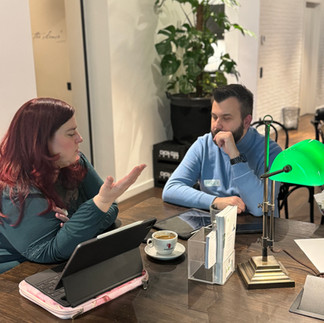
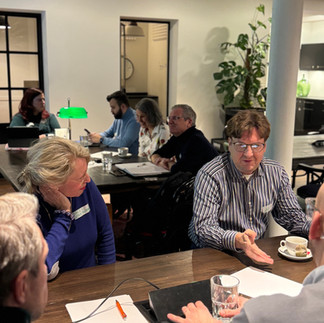
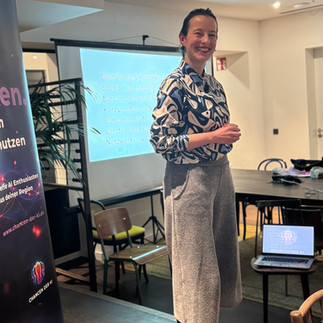
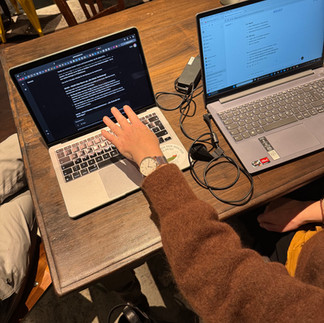
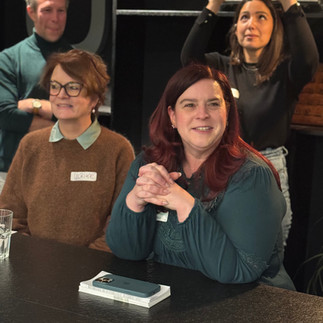
Impressions from the AI Hands-on Barcamp Düsseldorf

















What many have packed in their “suitcase”
Finally, there was a moment that we honestly need more often: to pause, condense, and take it all in.
What was mentioned several times:
Great contacts and the statement: We are not alone in this.
A suitcase full of prompts and the realization that refining ("prompt further / make it more concrete") often makes the difference.
A reminder that despite all the tech hype, the core remains human.
And then a sentence was uttered that could serve as the motto for the evening:
“The magic doesn’t happen here. The magic happens in your minds.”
Bonus: When AI bubble meets real life
Another special moment was the broader perspective: One participant presented the child protection foundation It's for Kids (with very concrete, pragmatic forms of support – not just money, but also in-kind donations and creative contributions). This gave the evening something that can't be planned: a grounding in reality .
You can find more information about the foundation here .
Thank you & what happens next?
Thanks to everyone who so openly shared their questions, challenges, and ideas. And thanks to nuwacom for the test environment. Evenings like these really make it clear what truly helps in everyday life.
Do you want to attend the next hands-on evening?
Then stay tuned via our LinkedIn community and newsletter updates .
The format remains: not a buzzword, but a tool.
Your AI Opportunities Team ® Community
About Us
The AI® Community offers the opportunity to participate: We bring together people who not only find AI "exciting" but actually want to use it. In our meetups, barcamps, and exchange formats, we work on real-world questions from businesses, freelancers, and everyday life. Hands-on, without buzzwords or promises. Our principle: try it out, compare, evaluate – and ultimately, the human decides.
Comments